

Why a Canadian Competitor Belongs in the Texas Barbecue Conversation
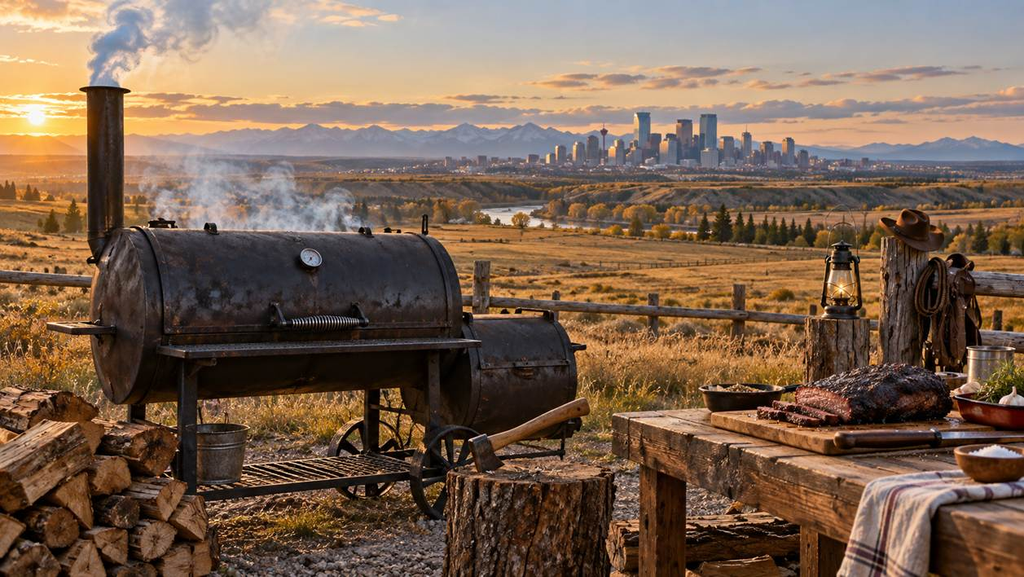
Calgary, Alberta, sits a long way from Lockhart, Austin, or Fort Worth, but the distance can be misleading. This is cattle country, ranch country, and cowboy country—a Canadian city built beside open prairie with the Rocky Mountains standing guard to the west. It is a place that understands beef, weather, hard work, and gathering around a fire. Those qualities make Calgary one of the most natural homes for Texas-influenced barbecue outside the Lone Star State. The cooking may have crossed an international border, yet the instincts behind it feel familiar: respect the animal, manage the fire, and do not rush what smoke and time must finish. Calgary’s growing barbecue culture is not simply copying Texas. It is learning a demanding tradition, adapting it to Canadian conditions and developing a voice of its own. Competitors such as Janice Smella of SmellaQue demonstrate how seriously Canadian pitmasters have entered that conversation—and how much they must overcome each time they carry a maple leaf into an American judging tent.
Calgary and Texas Speak the Same Western Language
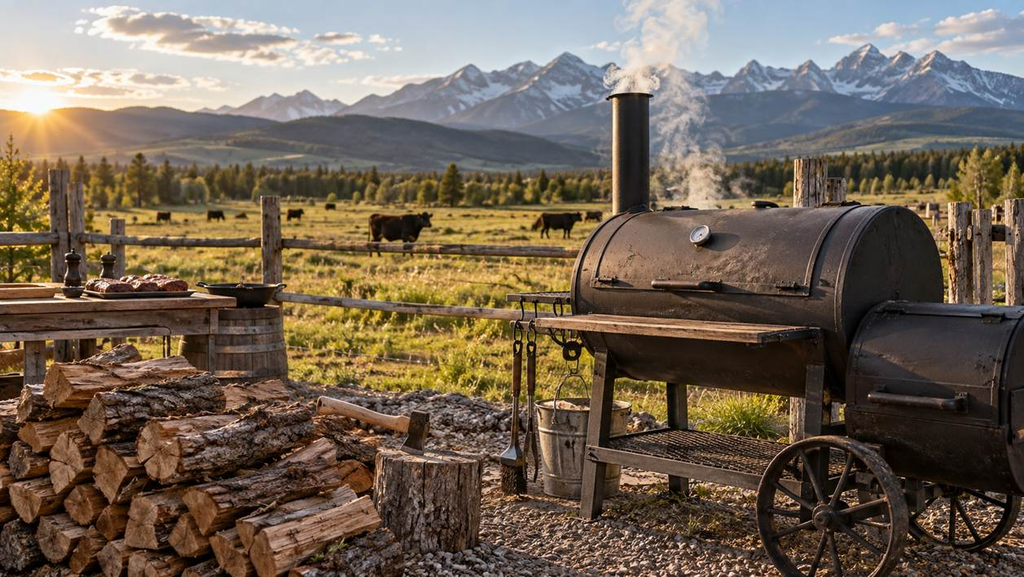
Texas barbecue did not develop in a vacuum. It grew from cattle, immigration, butcher shops, wood fires and communities that learned to turn tough cuts into treasured food. Calgary’s story is different, but its western vocabulary is strikingly similar. The Calgary Stampede celebrates western heritage, agriculture and community, while Alberta Beef Producers represents more than 18,000 cattle producers across the province. Beef is not an imported idea here; it is part of the region’s identity. That gives brisket immediate meaning. A whole packer brisket is not merely a fashionable menu item borrowed from Texas—it tests whether a cook understands fat, muscle, smoke, and patience. Calgary also embraces the hospitality surrounding barbecue. The table matters as much as the trophy, and feeding people remains the point. Texas visitors may recognize the boots, hats and ranch traditions, but Canadian barbecue becomes most interesting when those similarities stop being decoration and begin shaping how local cooks approach meat and fire.
Janice Smella and the Competitor’s Education
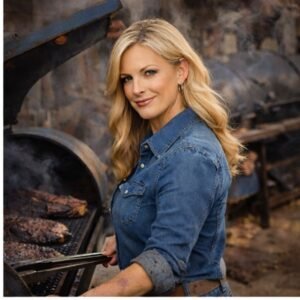
Janice Smella’s SmellaQue competition story offers a useful example of how that education happens. Smella has competed since 2014 and has built a reputation as one of Canada’s accomplished competition pitmasters. Her barbecue journey has included the American Royal and the Jack Daniel’s World Championship Invitational—events where a Canadian team parks beside experienced American cooks and is judged by the same clock, standards, and six-person tables. A formative trip to Texas helped sharpen her understanding of barbecue, but travel alone does not create a champion. The lesson has to survive the trip home. It must be translated into repeatable trimming, seasoning, fire control, tenderness, and presentation. That is where admiration becomes craft. SmellaQue represents a competitor willing to study barbecue’s traditions while testing those lessons under pressure. When a Canadian cook succeeds on an American circuit, it confirms that geography may influence barbecue, but disciplined execution travels.
The Border Creates a Harder Road to the Turn In Table
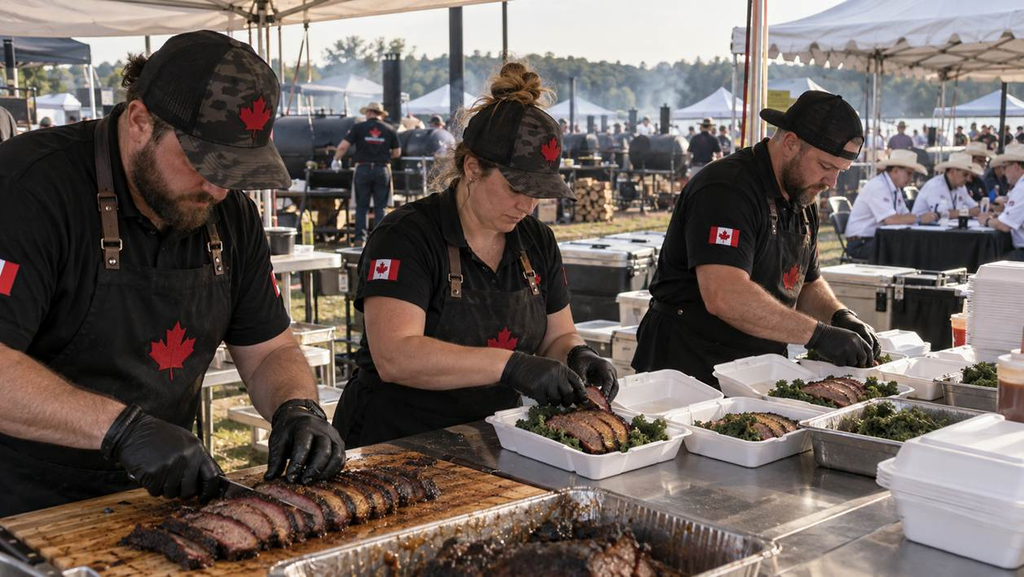
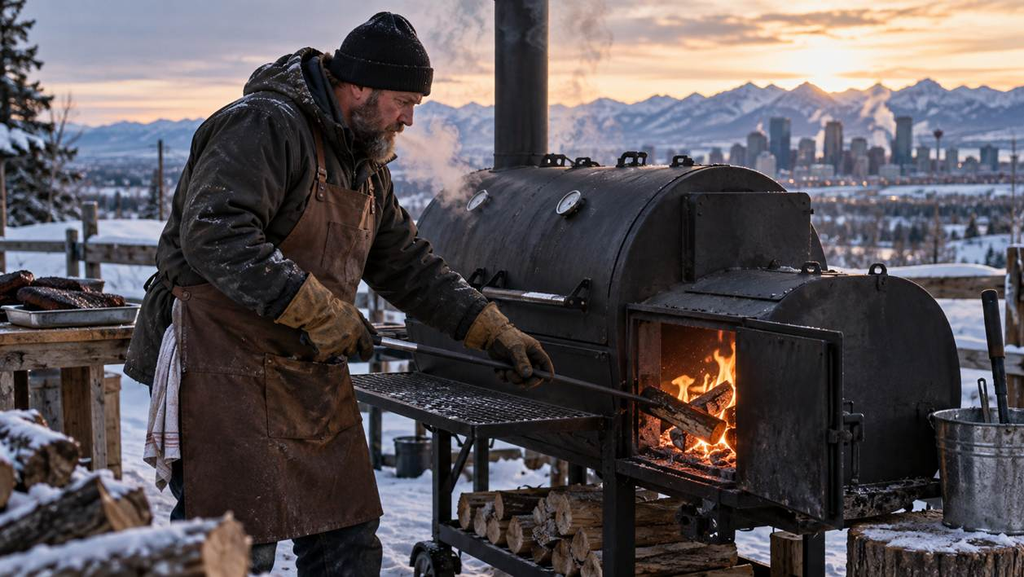
Every competition team fights exhaustion, expenses, and the clock, but an international competitor adds another layer of difficulty. Equipment, seasonings, supplies, and personal gear must travel. Meat sourcing can change from one side of the border to the other. Long-distance transportation introduces delays and forces a team to decide what to carry, what to buy locally, and what cannot be replaced. Then comes the cook itself: four major meat categories, narrow turn-in windows, and judges who never see the miles behind the box. Calgary’s climate adds another form of training. Cold air pulls heat from a cooker. Wind changes combustion. Snow and sudden temperature swings punish casual fire management. A cook who can hold a clean, steady pit through an Alberta night develops habits that matter anywhere. None of those challenges earns sympathy at judging. They simply help explain why a Canadian call at a major American contest means so much. The cook did not arrive as a novelty. The cook arrived prepared.
Competition Brisket Is Texas Tradition Under a Microscope
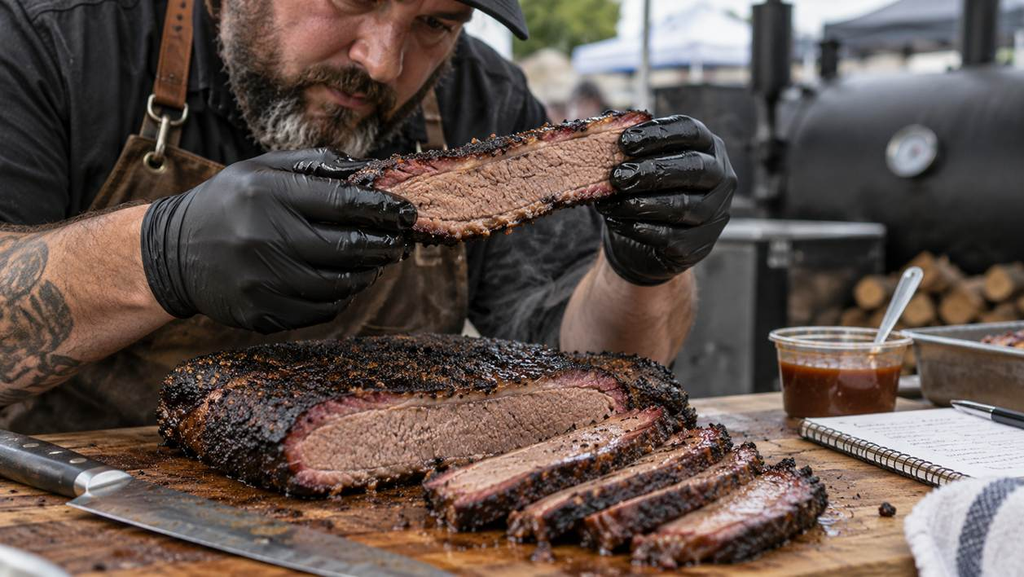
Restaurant barbecue and competition barbecue are related, but they are not identical. A Texas barbecue counter serves a range of customers over many hours. A competition team gets a few bites to make an unforgettable impression. That changes the strategy. Flavor must be concentrated without becoming harsh. Tenderness must land inside a very small window. Slices must hold together in the box, then surrender cleanly when bitten. For a Canadian competitor shaped by Texas barbecue, brisket becomes both tribute and examination. Judges may not demand a literal Central Texas profile, but they recognize balanced smoke, properly rendered fat, moisture, and controlled seasoning. The brisket cannot merely look Texan; it must eat beautifully. SmellaQue’s presence among elite fields illustrates the point. Canadian teams are not asking for a separate definition of excellence. They are accepting established expectations, refining them through competition technique and attempting to beat cooks who may have grown up much closer to the tradition.
Canada Is Adding Its Own Accent to the Smoke
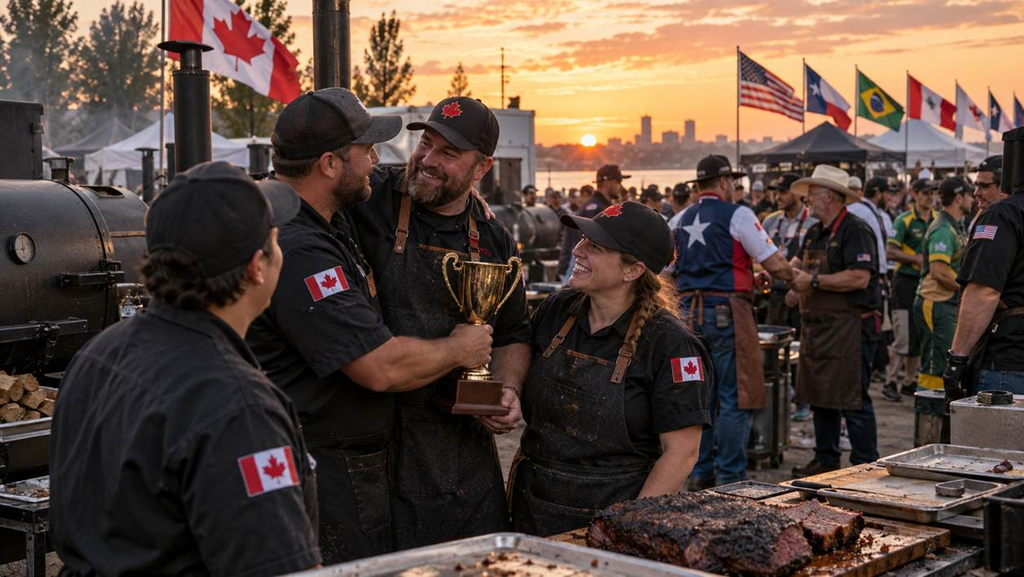
The most exciting result is not that Calgary can produce a reasonable imitation of Texas barbecue. It is that Canadian pitmasters are becoming part of barbecue’s international future. They bring Alberta beef, western heritage, colder-weather discipline and a willingness to travel in search of knowledge. They also carry home the lessons learned in Texas, Kansas City, Lynchburg and every contest field along the way. Local cooks teach other cooks. A backyard interest becomes a competition team; a competition team becomes a catering business, a class, a product line, or a restaurant. Standards rise because someone has tasted what great barbecue can be and refuses to settle for less. That exchange benefits Texas barbecue, too. A tradition stays alive when it is practiced with respect, challenged by talented outsiders and reinterpreted without losing its center. Calgary does not need to become Texas North. Its better opportunity is to be unmistakably Canadian while cooking barbecue that can stand confidently beside the best from Texas.
The Smoke Has No Passport
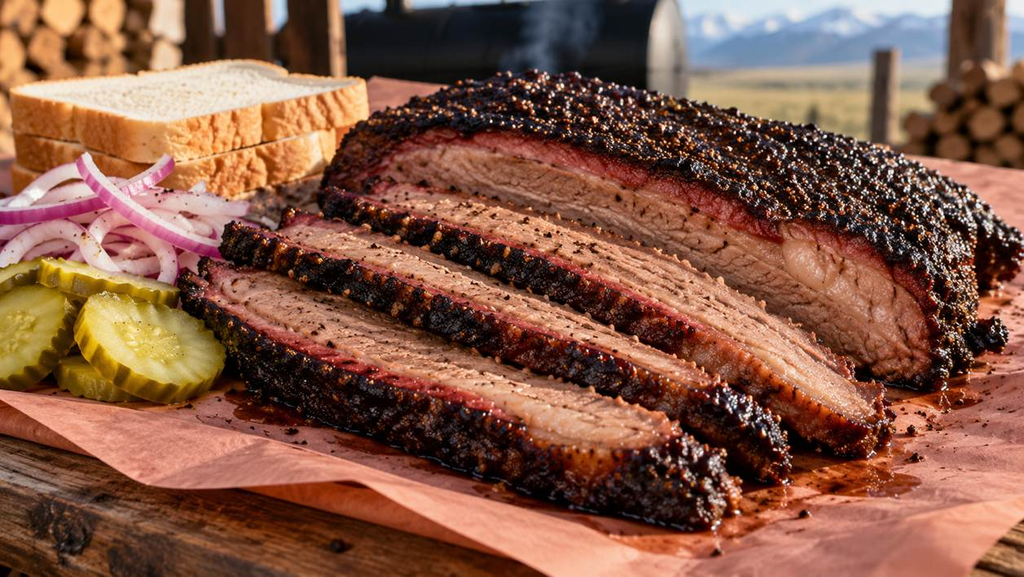
In the end, a brisket does not care which anthem was played before the contest. It responds to temperature, airflow, seasoning, time, and the judgment of the person tending the fire. That truth is what connects Calgary to Texas. Both places understand cattle and western identity, but competition strips away romance and demands proof. A competitor such as Janice Smella provides that proof by studying, traveling, cooking, and being measured against serious teams on serious stages. Being Canadian does not weaken the relationship to Texas barbecue; it makes the relationship more deliberate. The tradition had to be sought out, understood, and carried home across thousands of miles. Each clean slice of brisket shows that great barbecue can respect its birthplace without staying trapped there. From the Alberta prairie to an American championship turn-in table, smoke speaks a common language—and Calgary has earned the right to answer.
Sources Consulted
- Calgary Stampede — western heritage, agriculture and community information
- Alberta Beef Producers — provincial producer representation information
- Public SmellaQue interviews and competition profiles discussing Janice Smella’s career, Texas influence, the American Royal and the Jack Daniel’s Invitational